

We understand! If you are planning a corporate event in 2026, the reality is simple: some doors are already closed, but many critical decisions are still very much in play. You are not in this alone, let us be your subject matter partner.
A smart corporate event planning timeline is not about perfection. It is about understanding which decisions still offer leverage and which ones become more expensive, more constrained, or more stressful the longer they are delayed.
This practical, month-by-month guide is designed for planners working right now, whether you are finalizing a spring event, building a fall conference, or trying to keep multiple stakeholders aligned across the year. Think of this as your living event planning calendar for 2026 and beyond!
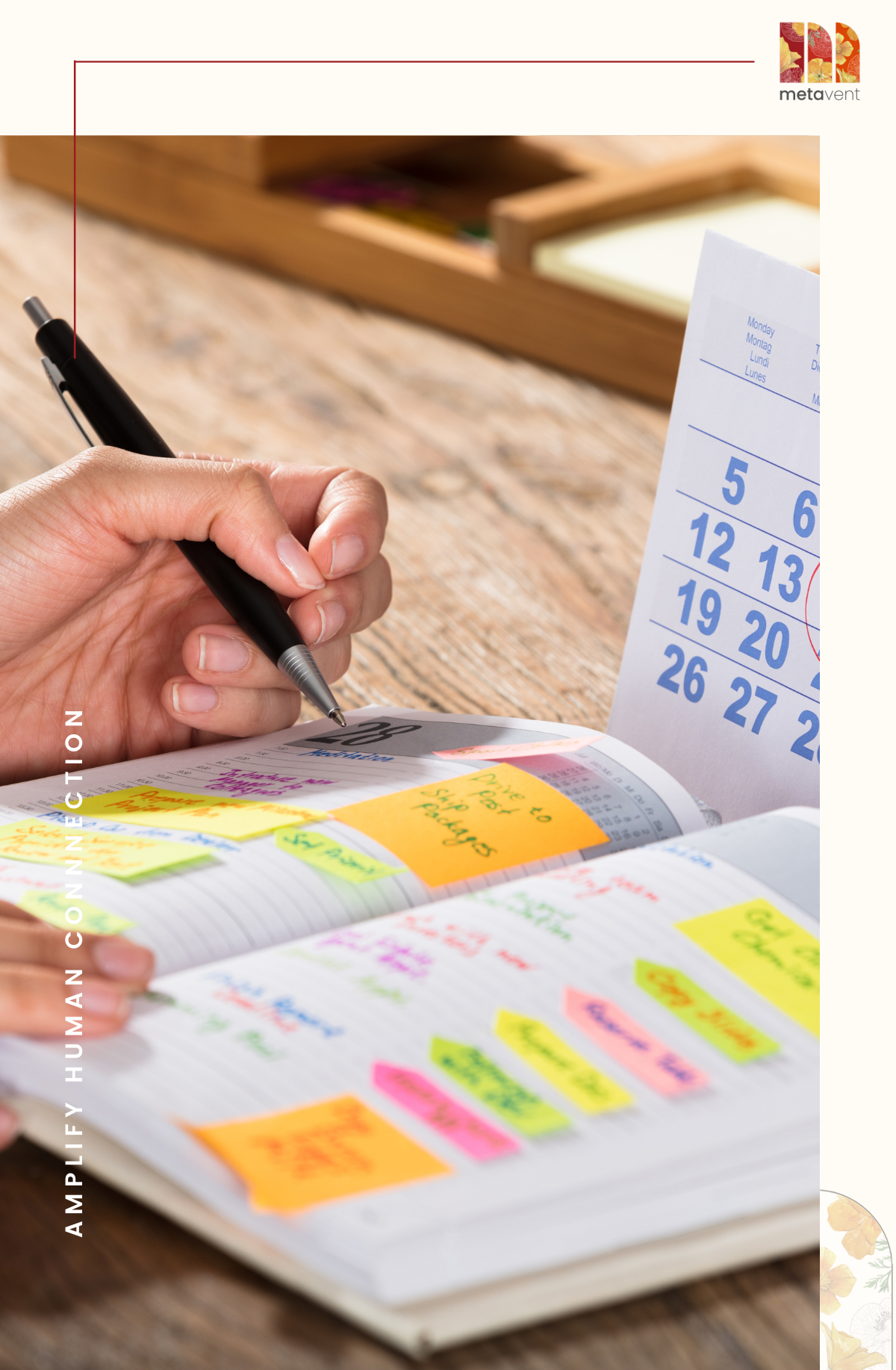
Let’s get real, we know your critical events calendar tends to look something like this:
With so many events and so much to do, having a solid plan and an experienced partner to guide you is the difference between drowning and swimming.
With that in mind, here’s a 12-month corporate event planning timeline to help you with all your future event planning:
Month 1 is when strong events get defined instead of improvised. This is where you set the foundation, while you still have leverage over cost, availability, and internal alignment.
We know this stage can feel heavy. You’re balancing multiple events, multiple stakeholders, and a lot of opinions, often before anything feels tangible. This is also where planners are expected to “just know” the answers, even when clarity has not fully formed yet.
This is where we come in as a strategy partner. We help you slow the chaos down just enough to make smart decisions early, so you are not carrying uncertainty into every conversation that follows.
What you need to lock in
Why this matters for you
Without clarity here, speed starts working against you. You move fast, but not always with alignment, which puts pressure on you later.
What gets harder if this slips
Misalignment shows up as budget tension, approval delays, and last-minute scope changes that land squarely on your shoulders.
This is when optionality starts narrowing in a very real way. Venue availability, pricing leverage, and layout flexibility all depend on committing before calendars fill.
This phase often triggers deeper questions for planners. Are our expectations realistic? Do we have the right partners supporting us? Is our current setup going to hold under the pressure of what this event actually requires?
We know how difficult it is to consider changing agencies or vendors at this point. The knowledge transfer alone can feel overwhelming. The risk feels personal, because if something goes wrong, it reflects on you.
This is where having an experienced event strategy firm matters. We know how to step in without dropping details, losing context, or creating extra work for you.
What you need to lock in
Why this matters for you
Once your venue is set, everything else becomes easier to plan and easier to defend internally.
What gets harder if this slips
Waiting often forces compromises on location, layout, or cost that ripple through the entire experience and add stress later. Need help getting started? This BizBash article does a great job letting you know about venue updates in 2026 and can help you find your dream location.
This is the phase where planning either stabilizes or quietly starts slipping.
When vendors are locked in early, they collaborate, anticipate issues, and help you stay ahead of problems. When decisions are delayed, you end up coordinating reactions instead of building momentum.
We also know this is where the fear of transition is strongest. Re-explaining history. Transferring knowledge. Trusting a new partner when so much is on the line. Many planners push through with less-than-ideal support simply to avoid that risk.
A strong strategy partner removes that burden. We manage the transition, hold the details, and keep everyone aligned so you are not re-living the same conversations over and over.
What you need to lock in
Why this matters for you
The right partners make you look prepared, confident, and in control, even when timelines are tight.
What gets harder if this slips
Late vendor decisions limit your options and increase the amount of coordination you personally have to manage.
By this point, your event needs a clear spine.
Agenda structure and speaker commitments shape pacing, production needs, staffing levels, and room layouts. This is where your event shifts from an idea to a real experience.
This is also where stakeholder pressure tends to peak. Leadership wants impact. Speakers need direction. Production needs clarity. Without support, planners often absorb that pressure alone.
We help you translate competing inputs into a cohesive plan, so you are not stuck playing referee.
What you need to lock in
Why this matters for you
Clear agendas give everyone confidence and give you fewer fires to put out later.
What gets harder if this slips
Compressed timelines lead to rushed content, uneven sessions, and unnecessary stress.
This is when your event becomes real to attendees.
Registration, communications cadence, and experience design need enough runway to build momentum and give you visibility into who is actually coming.
This is also where planners start fielding more questions, more opinions, and more last-minute requests. A good partner helps you manage expectations while keeping the experience intact.
What you need to lock in
Why this matters for you
Clear communication reduces guesswork and gives you data you can act on.
What gets harder if this slips
Late launches create pressure, reduce visibility, and make operational decisions harder than they need to be.
This phase is about pressure-testing your plan.
This is the invisible work that your planning partner should be doing. Staffing models, vendor coordination, accessibility considerations, and contingency planning all need to be locked in before timelines tighten.
If this work is rushed or skipped, you will feel it onsite. A strong vendor partner keeps you in the loop, manages the details, and helps herd all the cats required for a successful event.
What you need to lock in
Why this matters for you
When this is done well, you look calm and prepared, even when things shift.
What gets harder if this slips
Issues surface onsite, when fixes are more expensive and far more stressful.
This window should be about refinement, not reinvention.
At this stage, you should not be making major decisions. You should be validating, rehearsing, and communicating, with a partner who has your back.
Our role here is to protect you. To make sure nothing falls through the cracks and that you are not carrying the stress alone.
What you need to lock in
Why this matters for you
Calm event days are the result of disciplined planning and strong partnership.
What gets harder if this slips
Late changes cascade across catering, staffing, production, and guest experience all at once.
A clear corporate event planning timeline helps you move forward with intention instead of urgency. That difference is felt by attendees, stakeholders, and by you.
We also understand how difficult it can be to consider changing event agencies. The knowledge transfer. The stakeholder buy-in. The unknown risk. We understand what is on the line.
Transitions are not scary when you have the right partner.
Metavent is an event strategy firm that knows how to manage change without losing details, momentum, or trust. Whether you are recalibrating mid-cycle or planning ahead, we meet you where you are and guide you through every step.
You are not alone in this. Contact us today if you need help with your next event!
%201000px.webp)


